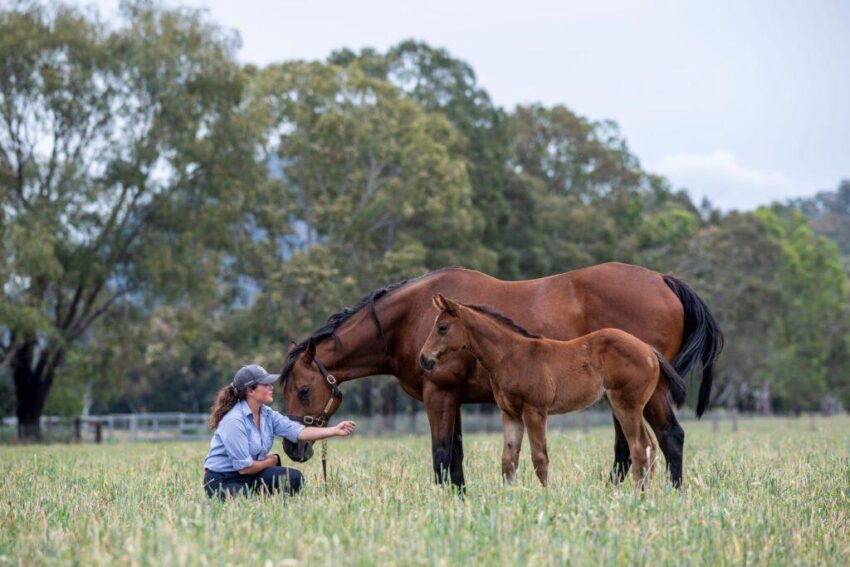
Every successful racehorse has a starting point, and in Australia that starting point is often a breeding farm.
Before a horse carries a jockey, attracts a betting market or competes for prize money, breeders have already invested significant time, knowledge and capital into producing it. Thoroughbred breeding is therefore one of the foundations of Australia’s racing economy.
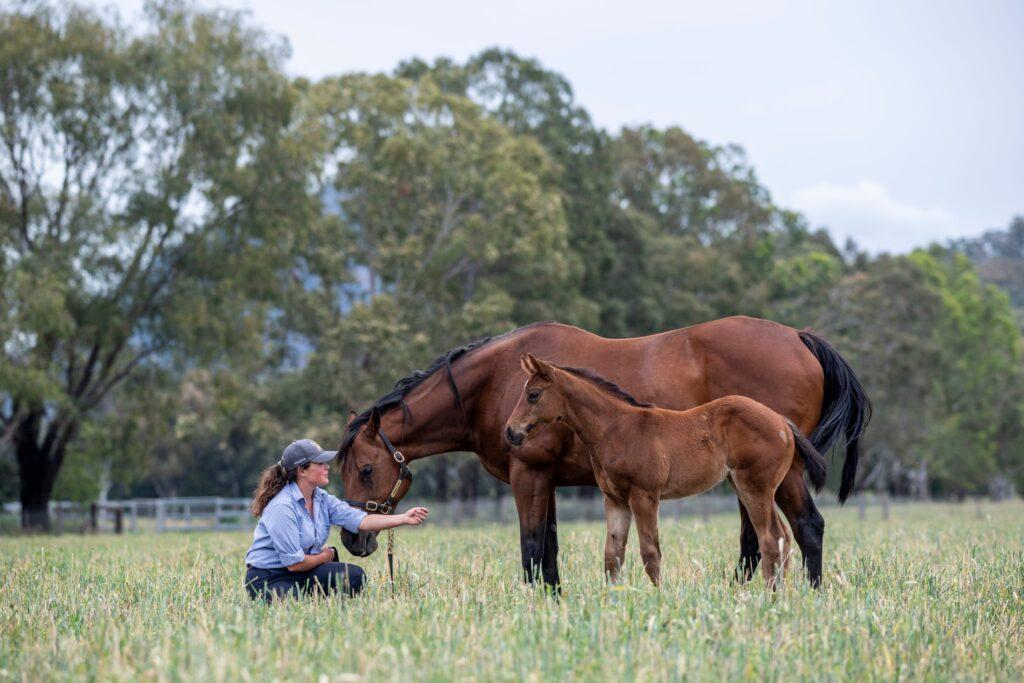
The breeding business revolves around bloodlines, performance, conformation, genetics and commercial demand. Breeders choose mares and stallions with the objective of producing foals that may eventually become valuable racehorses. A successful mating can create an asset that moves through several stages of the racing industry, from the breeding farm to the yearling sales ring and eventually to the racetrack.
Australia has developed a substantial commercial market around this process. Racing Australia’s 2024/25 Fact Book separately tracks breeding statistics, leading sires, Australian imports and exports, demonstrating how important bloodstock is to the national racing structure.
More Than a Farm
A modern thoroughbred breeding operation is much more than land and horses.
Breeding farms require veterinarians, stable staff, farriers, nutrition suppliers, transport operators and specialist equine services. Foaling season can turn a quiet rural property into a highly active business environment.
The commercial journey continues after the foal is born. Young horses may be sold as weanlings or yearlings, retained by the breeder or prepared for future racing.
That creates an interesting business model: breeders are investing today in animals whose commercial value may not become clear for several years.
The Value of Bloodlines
Pedigree is one of the industry’s most visible commercial influences.
A horse from a successful family, particularly one connected to high-level race winners, can attract greater attention from buyers. Successful stallions can also become important commercial assets because breeders are prepared to pay substantial fees for access to proven genetics.
This turns performance on the track into value in the breeding market.
A racehorse that succeeds at the highest level may therefore become more than a competitor. Its future value can extend into the breeding industry.
The Regional Business Connection
The breeding industry also helps explain why horse racing has such a large regional footprint in Australia.
Racing Australia estimates the broader thoroughbred industry contributes about A$9.5 billion to the Australian economy, with approximately A$4.8 billion generated in regional Australia.
Breeding farms are an important part of that regional ecosystem, creating demand for local services and specialist workers.
The result is a business that begins with genetics but quickly expands into agriculture, transport, employment and property-based services.
The Long-Term Investment
Thoroughbred breeding is ultimately a business built around uncertainty.
A carefully planned mating does not guarantee a champion. A highly regarded yearling may never become a top-level racehorse. Yet the possibility of producing exceptional bloodlines continues to drive investment.
That is what makes the breeding sector so fascinating. Before the public sees a star horse on television, there has already been a long chain of decisions made by breeders, veterinarians, advisers and owners.
In Australian racing, the business of tomorrow often begins with a foal born today.