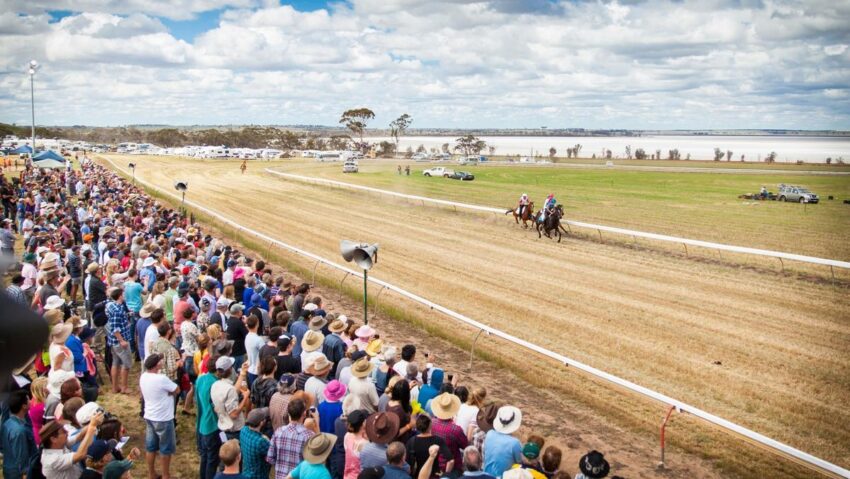
Some of Australia’s most important racing businesses are far away from the major city racecourses.
Breeding farms, training operations, spelling properties and regional race clubs form a huge network that helps keep the national industry operating.
Racing Australia’s latest Fact Book describes the thoroughbred industry’s economic contribution as approximately A$9.5 billion, with around 51 per cent, or A$4.8 billion, generated in regional Australia. It also reports that 63 per cent of people participating in the industry live in regional areas.
The Rural Racing Economy
A breeding farm does not operate in isolation.
It may buy feed locally, employ agricultural workers, use veterinary services, hire transport providers and purchase fencing, machinery and other supplies.
A training operation creates another network of customers.
Horses need regular care, specialised equipment and transportation, meaning businesses in surrounding communities can benefit from racing activity even when they never host a major meeting.
Employment Beyond the Track
The racing economy supports a wide range of jobs.
Some are obvious, such as trainers, stable employees and jockeys.
Others are less visible: veterinarians, farriers, transport workers, feed merchants, property managers, administrative staff and specialist contractors.
This diversity is particularly important in regional communities where industry-specific employment can have a meaningful local impact.
Racing Clubs as Community Organisations
Regional race clubs can also provide social and economic value.
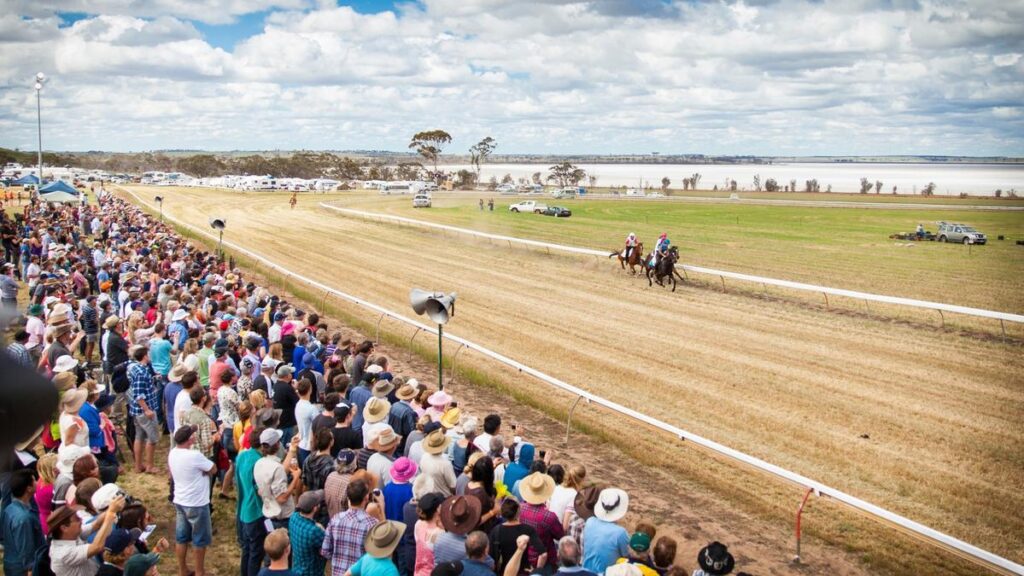
Race days bring together participants, spectators, volunteers, hospitality workers and local businesses.
The Racing Australia Fact Book identifies 21,425 volunteers supporting racing clubs and participants, highlighting the community dimension of the industry.
Tourism and Local Spending
A race meeting can also bring visitors into regional towns.
Travel, accommodation, meals, transport and entertainment can generate spending beyond the racecourse.
The scale varies from one meeting to another, but the principle is consistent: racing can act as a reason for people to visit a regional community.
Why Regional Racing Matters
The city racecourse is often the most visible face of Australian racing.
The regional economy is the less visible foundation.
Without breeding farms, trainers, suppliers, workers and regional participants, the metropolitan racing calendar would have far less infrastructure supporting it.
Australian horse racing may be showcased in the country’s major cities, but a significant part of its business is built in regional Australia.