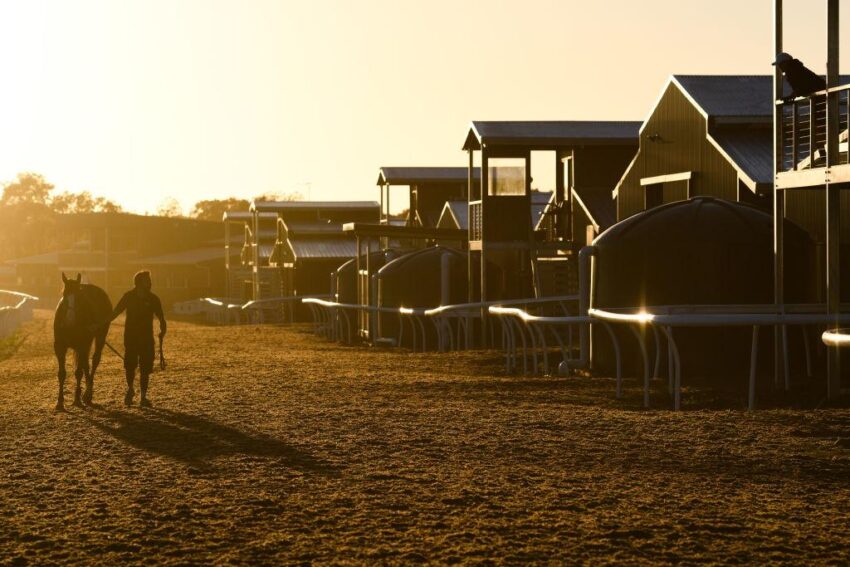
A racehorse may spend only a few minutes competing on race day, but the preparation behind those minutes can take months.
That makes the training operation one of the most important businesses in Australian racing.
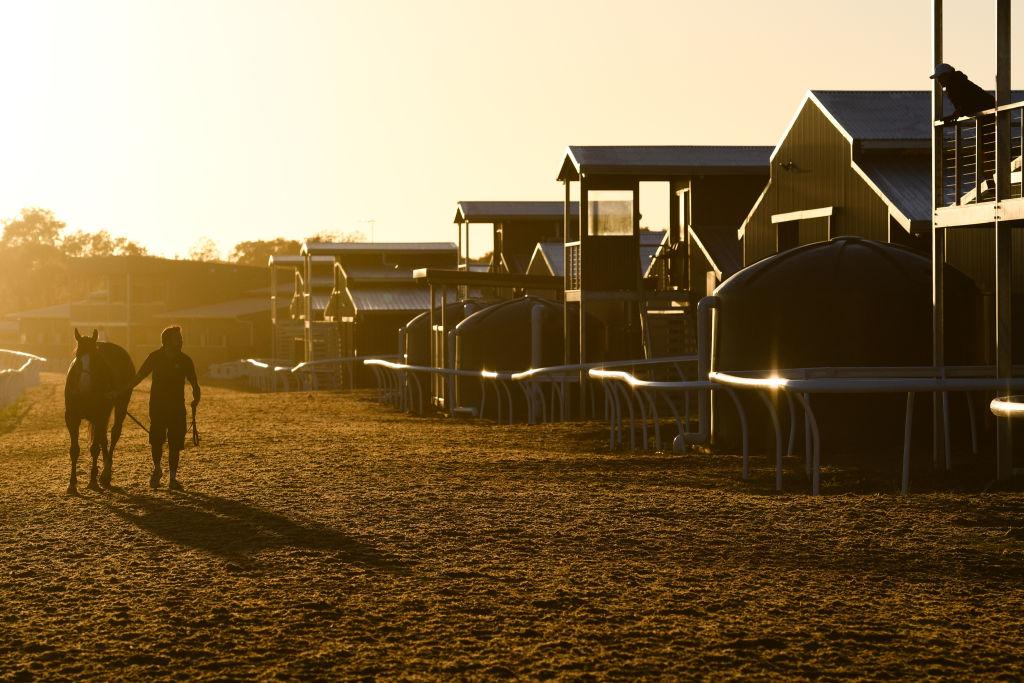
Trainers manage much more than race tactics. Their businesses involve staff, horses, facilities, suppliers, veterinarians, transport companies and constant communication with owners.
The Stable Is a Workplace
A professional stable operates every day.
Horses need feeding, grooming, exercise, veterinary monitoring and recovery. Staff need to be scheduled and facilities maintained. Equipment has to be ready and horses transported when required.
For larger operations, the trainer is effectively managing a specialised workforce and a large number of high-value assets simultaneously.
Racing Australia’s 2024/25 Fact Book recorded 2,661 trainers, 850 jockeys and 35,675 active horses across Australian flat and jumps racing.
Performance Becomes the Product
A trainer’s reputation is built around performance.
Owners want horses prepared efficiently and placed in races that suit their abilities. A trainer who develops successful horses can attract more owners, stronger bloodstock and greater commercial opportunities.
This creates a cycle:
Results → reputation → owners → horses → opportunities → results.
That cycle is one of the most important forms of business growth within professional racing.
The Supplier Network
Training operations also support a long list of specialised businesses.
Feed suppliers provide nutrition. Farriers maintain horses’ feet. Veterinarians handle diagnosis and treatment. Transport companies move horses between farms, stables and racecourses.
Equipment suppliers, property contractors and technology companies also contribute to the operation.
The trainer may be the public face of the stable, but a much larger group of businesses helps keep it functioning.
Location Matters
Training is not limited to Australia’s major city tracks.
Regional racing and training centres play an important role in the broader industry, contributing to Australia’s large regional racing economy. Racing Australia estimates that roughly half of the industry’s economic activity occurs in regional Australia.
This gives training businesses significance beyond racing itself. A busy stable can become an important customer for local suppliers and service providers.
The Modern Trainer
Today’s trainer operates in an environment where data, communication and business management are increasingly important.
Owners expect regular updates. Racing schedules are managed carefully. Veterinary information and performance data influence decisions.
The trainer therefore sits at the intersection of horsemanship and business management.
The horses may provide the excitement, but behind them is a professional operation designed to make thousands of small decisions correctly.
That is the real business of a racing stable: turning daily preparation into competitive performance.